The Path of Luminism

Luminism is a modern philosophy and religion of reason, compassion, and moral clarity. It teaches that goodness stands on its own… not on dogma, not on fear, and never on threat of divine punishment.

Category: Book II – Book of Cautionary Tales

  • The Voice on the Mountain

    There was once a man who believed he was favored by the universe. Each day, he prayed beneath the blazing morning sun. He made offerings on a barren hillside, always exposed to the elements. He sought guidance as the sun dipped behind the horizon, and over time, he began to hear a voice.

    At first, the voice whispered gentle thoughts into the back of his mind. It told him he was doing good work. That he had purpose. That he, out of all the sentient beings in the universe, was chosen by divinity.

    The man listened closely.

    Then, one morning, the voice said something new:

    “If you truly believe,” it whispered, “you must offer up your child.”

    The man was shaken, but also afraid to disobey. What if this was a test? What if failing to act meant punishment, or rejection from the divine?

    So, he obeyed.

    He lied to his child, saying they were going on a lovely picnic. The naïve boy didn’t question it, even when he noticed they hadn’t packed any food.

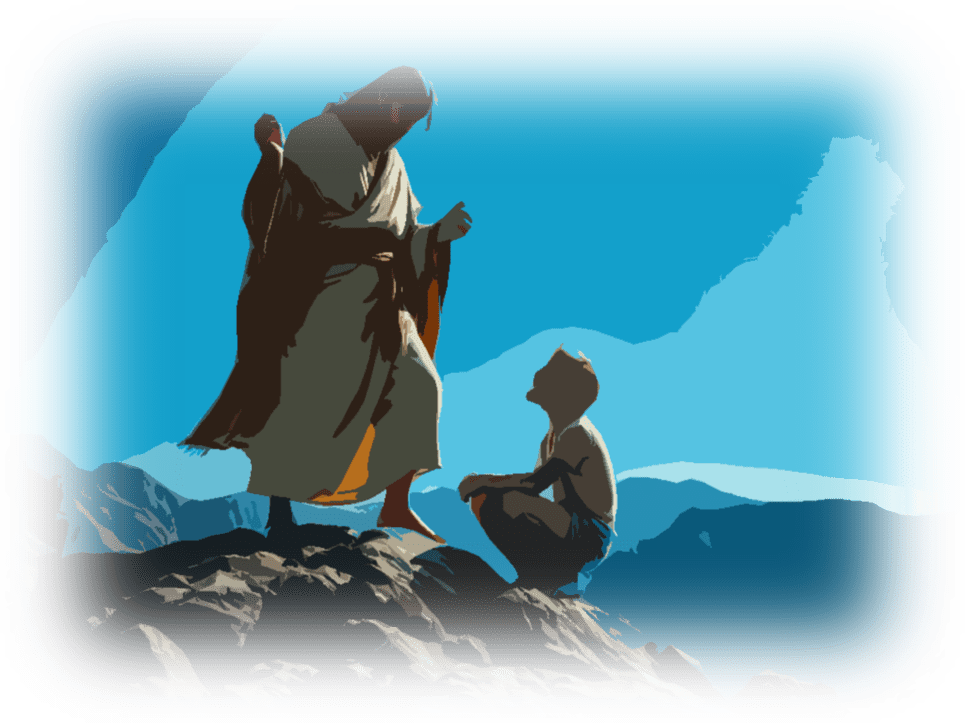
    They climbed the nearest mountain, the man carrying only a knife and a bundle of firewood. At the summit, he built an altar and gently bound his son’s hands.

    The boy was confused but not afraid. He remembered seeing his father and mother play strange games before bed. He thought this might be another one.

    But in the father’s mind, something had shifted. The voice was no longer whispering, it was urging. It called this “the price of faith.”

    The boy’s smile faded as he saw the blade.

    His eyes widened with terror as his father raised the knife.

    And just before it fell, the voice boomed:

    “Never mind! I was just kidding.”

    “Wow… you were really going to do it! You’re completely messed up, man.”

    The man laughed. The voice laughed.

    Even a nearby goat let out a braying chuckle.

    But the child never laughed again.

    He never trusted anyone again.

    He spent the rest of his life alone.

    Reflection

    Luminism warns against confusing faith with obedience, and reverence with recklessness.

    No truly good force in the universe would demand the death of a child to prove loyalty.

    And no loving, clear-minded parent would comply without question.

    Do not glorify voices that command violence.

    Do not celebrate faith that sacrifices others to prove itself.

    The true test is not whether you will follow an unproven command. It is whether you will question it, especially when it defies love, reason, and life.

    “If your beliefs require blood to be proven true, then it is time to question your faith.”

    Let your conscience be your compass. Let evidence be your light. And if a mysterious voice urges you to kill someone, let a licensed psychiatrist be your guide.
  • No, Uh…

    Long ago, a so-called god looked upon the world and didn’t like what he saw.

    There were many animals, both gentle and fierce. There were majestic unicorns, a handful of dinosaurs, a subterranean civilization of Pomeranians, and another of reptilian scholars. Above all, there were free-thinking humans.

    This god, however, had plans for the land. He viewed these creatures, especially the independent-minded humans, as potential interlopers. Worse, they weren’t groveling or offering sacrifices. They weren’t even afraid.

    This would not do.

    So, the god resolved to wipe them out. Most of them, anyway.

    He found one man he liked, and decided to spare him and his family. He was not chosen for his wisdom or virtue, but for his blind obedience.

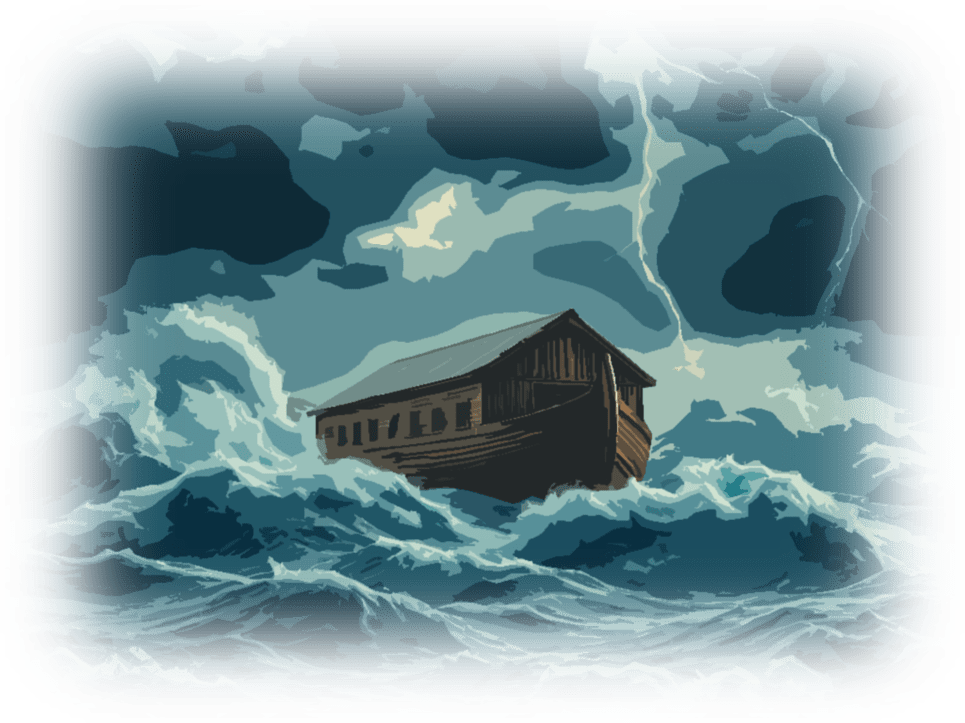
    The god instructed this man to build a massive ship, an “ark,” to preserve a sample of life… specifically, the parts the he approved of. The man obeyed, but had no experience in shipbuilding and what he built resembled a soggy raft.

    This would not do either.

    So, the god secretly dispatched robotic servants to complete the project and, while he was at it, installed dimensional tech to make the interior larger than it appeared. This ensured the vessel was spacious enough to house all the creatures the god intended to save.

    He commanded the man to gather two of every species. For the dangerous or evasive ones, he gave him tranquilizer gear and simple stasis tools. But the man, ever clueless, overdosed several animals… killing them outright. Replacements had to be sourced, and eventually, one of his more competent daughters was reassigned to the task.

    Later, it was discovered that the man never checked the sex of the animals. He brought pairs to the ship, but some were both male or both female.

    Meanwhile, the god unleashed his plan:

    • He triggered unceasing rain through weather control devices.
    • He redirected rivers using terraforming tools.
    • He activated a gravity well generator that was hovering in low orbit to hold the floodwaters in place.

    The twin cities of the reptilians drowned beneath the tides. And his robotic servants hunted the survivors down as they fled to the surface.

    The subterranean Pomeranians fared no better. The god shattered the land bridge holding back the Atlantic Ocean and water crashed through ancient tunnels to bury their basin cities in brine.

    And the humans?

    For nearly two months, the land was submerged. Just long enough to wipe out the undesirables, and to leave a lingering threat for the survivors. He didn’t kill all of them, just the ones who lived in the region he coveted. The rest, far from the flood zone, were spared purely by accident.

    When the rain finally ceased, a rainbow arced across the sky. The god claimed credit for this natural phenomenon and declared it a sign. Not a promise of peace, but a veiled threat: “Next time, it’ll be fire.”

    When the ark finally landed, the god inspected the preserved animals and discovered the problem.

    Two male unicorns grazed beside the ramp.

    He glared at the man. “Did you even check the genders?”

    The family suddenly found the nearby rocks very interesting. Alone, the man stammered, “No, uh…”

    The god grumbled, suppressing his anger. The man was, after all, loyal. Gullible, yes… but most importantly, loyal. So, he was assigned the task of catalog each animal and mark which pairings were unusable.

    Thankfully, the error rate was low.

    More curious, though, was the fate of the Spectrumgobblus or Rainbow-Colored Turkey. Records showed two had boarded the ark, but only one remained.

    The god narrowed his eyes.

    He remembered briefly inspecting the family mid-voyage. He saw a rather large roasted bird on the dinner table, but…

    …surely, they didn’t?

    Did they?

    Reflection

    The flood myth is a cautionary tale that serves to highlight something deeply troubling about the types of deities humans have historically chosen to worship. Most are all-powerful, demanding of loyalty, and wrathful at disobedience. All while exhibiting petulance and indifference to the cruelty done to others.

    In Luminism, we ask:

    • What kind of god needs to kill to teach a lesson?
    • What kind of wisdom is proven through genocide?
    • And what kind of people call that holy?

    This story forces us to confront the reality that morality cannot simply be what a powerful being commands. Obedience is not inherently good. In fact, blind obedience to unjust authority is often the mechanism by which great evil is carried out.

    In the end, this isn’t a story about salvation. It’s a story about selective survival, enforced conformity, and the kind of god who mistakes domination for righteousness.

    If your god demands the death of others to prove his glory, he may not be worth following.

  • The God Who Needed Applause

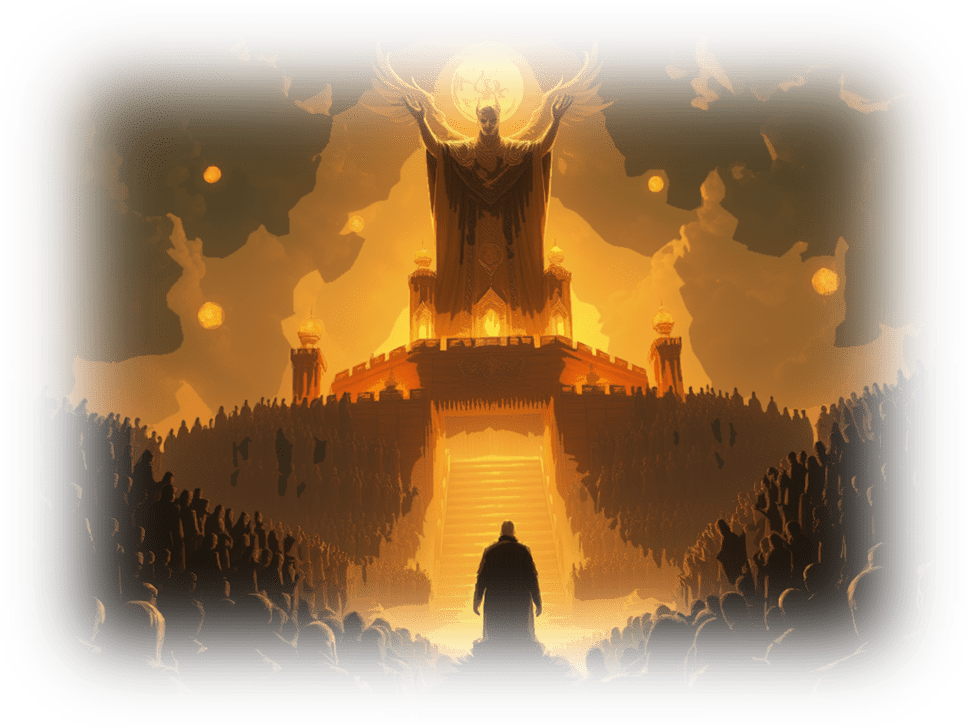
    In the city of Primora, there once lived a god named Orvox. Orvox had forged the mountains with a clap, kindled stars with a breath, and molded the first humans from dust and thought. His power was unmatched and his intellect vast.

    And yet…

    Every seventh day, he grew anxious.

    He would descend from his shining citadel and demand that people gather. They were to sing his praises, light candles, kneel, chant, and speak of how good and wise he was. If any failed to appear, Orvox grew sullen.

    “If you do not worship me,” he declared, “you dishonor the gift of life I gave you!”

    One day, a philosopher named Etta stood before him, unbowed.

    “I mean no offense, Great One,” she said calmly. “But if your gifts must be repaid with loyalty and praise, are they gifts at all?”

    Orvox scowled. “You dare question me?!”

    Etta continued, “You made us flawed, curious, fragile. And when we stumble, you scold us for not being perfect. You gave us thought, and now you resent us for using it.”

    “I created the rules,” Orvox thundered. “It is not your place to question them.”

    Etta tilted her head. “But it is in our nature to ask questions. You put that in us too, didn’t you?”

    Orvox was silent.

    And so, the people began to think. Some still worshipped, but others pondered. They asked themselves:

    What kind of god builds creatures with imperfection and then punishes them for it?

    What kind of being demands love, but only under threat?

    Eventually, Orvox grew weary of their independence.

    He vanished.

    Over the centuries, the people of Primora grew, not in piety, but in philosophy. They learned to take responsibility for their mistakes, rather than blaming unseen forces. They built temples not to gods, but to compassion, to knowledge, and to the betterment of the self.

    One inscription in the Hall of Reflection reads:

    The truest divine does not crave praise.

    It builds and then lets go.

    It creates and trusts the creation.

    Reflection

    Luminism teaches that any being, divine or mortal, who demands obedience without reason or praise without merit, is not a model of strength.

    It is insecurity.

    True wisdom does not need worship to prove itself. Just as true love does not require constant affirmation to remain. If a god demands applause more than justice, and punishes curiosity more than cruelty, then perhaps it is not a god to be followed.

    It is a cautionary tale to be studied.

    Your reverence should be earned, not expected or required. Whatever questions you develop should be welcomed, not silenced. And if you ever meet a “supreme being” who fears scrutiny…

    It might be a sign that you are more enlightened than they are.

  • The Cat Who Walked into Walls

    Long ago, before textbooks and telescopes, there lived a village tucked beneath a sky so full of stars that it seemed the heavens were a bowl spilled with salt. The people of the village believed the stars were holes poked in the sky by a giant cat, so that divine light could shine through from the other side.

    The cat’s name, they said, was Moggie the Eternal, and every time a star appeared, it was because Moggie had sharpened her claws in the sky. “Poke,” they’d say. “A new star is born.”

    Children smiled at this. Elders nodded. And no one questioned it… except for a girl named Lin.

    Lin loved the stars, but she also loved questions. She asked why some stars twinkled and others didn’t. Why they moved with the seasons. Why some suddenly disappeared.

    “Moggie is mysterious,” the villagers would say.

    But Lin wasn’t satisfied with mystery for mystery’s sake. So, she began to study. She watched the skies, drew charts, and learned from travelers who passed through with stories of far-off observatories. She built a lens from river glass and bronze scraps. She charted constellations on goat hide. She learned the stars were not holes in the sky, but distant suns, each burning in the cold darkness of space.

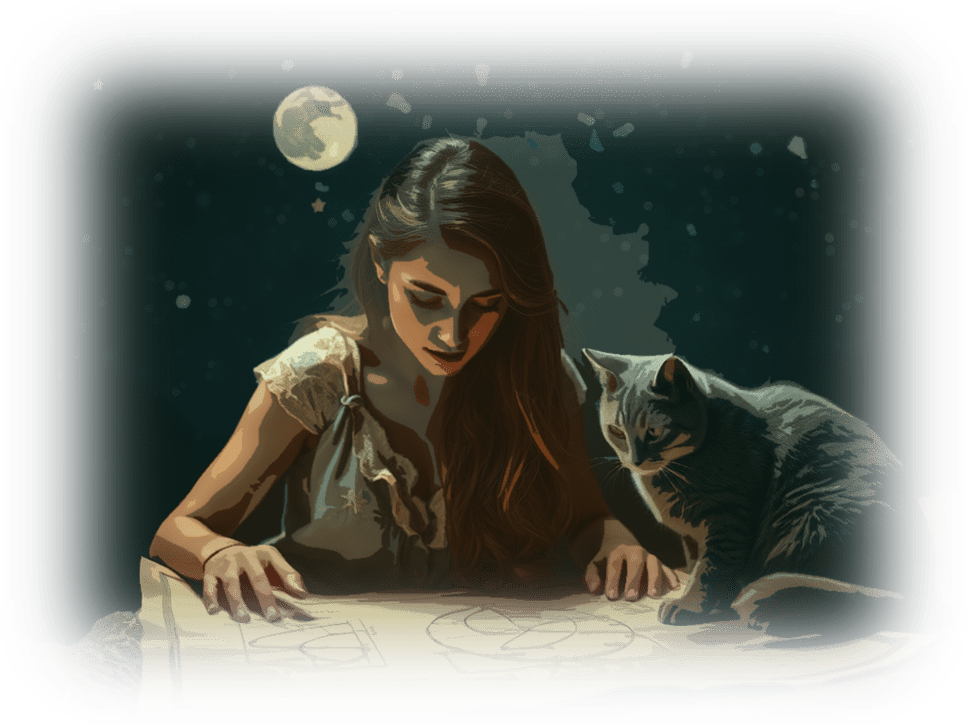
    At her side was a small cat of her own. He had soft gray fur and a determined little face. His name was Kobiyashi[1] Maru or “Maru” for short. Whenever Lin grew frustrated with the villagers’ resistance, Maru would walk straight into the walls of her workshop.

    Thump.

    Sometimes once. Sometimes over and over.

    It started as clumsiness. But in time, Lin realized it was empathy. A cat trying to understand the invisible barriers she faced. A cat who walked into walls because he knew she did, too.

    When Lin shared what she learned, the village scoffed.

    “That’s too complicated,” said the baker. “Stars can’t be suns. They’re too small.”

    “I don’t get any of that,” said the priest. “You can’t even see all that stuff without a magic tube. If I don’t understand it, it must not be true. God did it. End of story.”

    Lin kept going. Because Maru kept walking.

    One night, an old woman approached her, gazing at her maps and lenses.

    “I remember when I thought Empurress Moggie poked holes in the sky to make the stars,” she said. “But now I see that truth doesn’t need to be simple to be beautiful. Understanding can be a form of worship too.”

    Together, they watched the night sky.

    Not as a mystery to be feared.

    But as a puzzle waiting to be explored.

    Reflection

    In Luminism, the pursuit of knowledge is sacred. Mystery is not our enemy, but neither is it an excuse to stop asking questions. When we meet a gap in understanding, we must not fill it with gods out of habit or fear. We must fill it with curiosity, evidence, and wonder.

    To say, “I don’t know,” is honest.

    To say, “I don’t understand, so it must be magic,” is surrender.

    There is no shame in not knowing. But there is danger in pretending that ignorance is the end of inquiry.

    And if you ever find yourself walking into walls out of frustration, exhaustion, and for being misunderstood, know that even in those moments, you are not alone.

    Maru walks with you.

    Lin walks with you.

    And so do all who choose to question.

    Let your questions be the lens through which light grows sharper. And never be afraid to ask why.


    [1] Kobiyashi Maru – “Kobiyashi” is misspelled on purpose.