This section answers common questions about our religion that prospective followers and inquiring minds may have.
General Beliefs
What is the core belief of this religion?
This religion is founded on the belief that morality, community, and purpose can exist without allegiance to a deity. Followers are encouraged to do good based on reason, compassion, and ethical responsibility.
Do you worship a god, goddess, or supernatural being?
No, I do not. However, followers are free to hold personal beliefs about deities if they choose.
What happens after we die?
In Luminism, the afterlife is determined by one’s actions in life:
- Those who lived good lives transition into a utopia of their own making.
- Morally neutral individuals continue as NPCs.
- Evil individuals endure a hellish existence for 100 years before being reincarnated for a second chance.
- Those who commit unforgivable acts, or fail their second chance, are permanently erased
Is there a concept of sin in this religion?
Not in the traditional sense. In fact, this is the first and only usage of the word.
Harmful and destructive actions, particularly those that hurt others, are considered evil. However, three acts are considered unforgivably evil and result in the permanent deletion of the soul: murder, rape, and consistently harming others with malicious intent.
How does this religion view good and evil?
- Good – Actions that uplift and benefit others.
- Evil – Actions that cause unnecessary harm.
Do followers have to believe in an afterlife to be part of this faith?
No, belief in an afterlife is not required. Ethical living in the present matters more than speculation about what happens next.
What is considered sacred in this religion?
The pursuit of knowledge, the well-being of others, and the freedom to seek truth without fear of punishment or coercion.
Is prayer or meditation a part of practice?
There are no required rituals. Prayer can be uncomfortable for some, especially when it’s imposed in social settings where nonparticipation is seen as rude, ironically, by the same people who condemn hypocrisy. However, followers are free to pray or meditate if they find it meaningful.
More important than formal worship are reflection, self-improvement, and taking meaningful action.
Are there any holy texts, and how were they written?
Yes, this is the only holy text. It was written with careful thought about how nonreligious people can live morally good lives without relying on divine commandments or fear of punishment.
Moral & Ethical Views
What are the most important virtues in this belief system?
Integrity, compassion, responsibility, knowledge, and community service.
How should followers treat those who don’t share their beliefs?
With respect and kindness. Disagreement should never be a reason for hostility.
What does this religion say about helping others and community service?
Helping others is one of the most important aspects of a meaningful life. Community service is encouraged as a way to improve the world and make a lasting impact.
How does this religion define justice?
Justice involves holding individuals accountable in a way that is fair, reasonable, and focused on healing the wronged party while preventing further harm. Punishment should not exist for its own sake.
How does this religion address issues of revenge, punishment, and forgiveness?
- Revenge is discouraged, as it often leads to more harm.
- Punishment should serve a constructive purpose beyond mere retribution.
- Forgiveness is encouraged when genuine remorse and reparations are made, but is never required.
Are there any forbidden actions or unforgivable deeds?
Yes. The most severe evil acts result in the permanent destruction of the soul upon death. These unforgivably evil deeds are: Murder, Rape, and consistently harming others with malicious intent.
Social & Cultural Aspects
Does this religion have any holidays or special observances?
There are 6 ½ holidays.
- Pi Day (March 14)
- The Ides of March (March 15)
- The Forgotten Day (March 16)
- St. Patrick’s Day (March 17)
- Summer Solstice (June 21)
- Autumnal Equinox (September 23)
- Winter Holiday (December 21)
Are there any symbols associated with this religion?
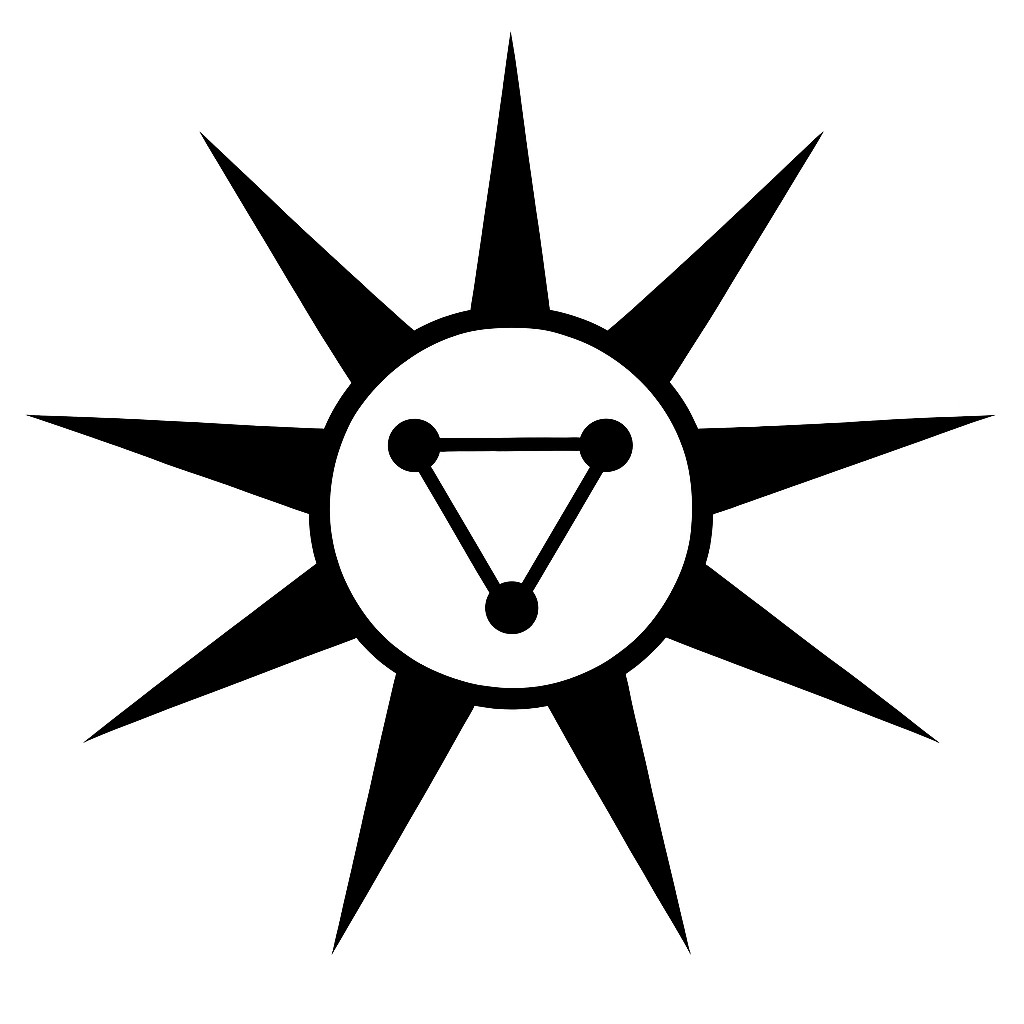
Yes. Luminism recognizes one official emblem, The Ninefold Light. It best represents clarity, balance, and philosophical depth.
The symbol features:
- A radiant circle, representing reason radiating outward from a centered mind.
- Nine equal rays, signifying the Nine Please Principles that guide ethical and spiritual life.
- A triangle of stars, symbolizing connection, wonder, and guidance through the unknown.
Though this is the official symbol of Luminism, individuals are still welcome to personalize or reinterpret its elements. As with all aspects of Luminism, expression is encouraged, so long as it honors the values of clarity, compassion, and reflection.
Is humor an important part of this religion?
Yes! Humor keeps people grounded, prevents self-righteousness, and helps foster a sense of community.
How does this religion handle conflict among its followers?
Followers are encouraged to resolve conflicts through dialogue, compromise, and reason. When necessary, impartial mediation may help settle disputes.
Is Luminism Woke?
Luminism affirms the dignity of all sentient beings and opposes racism, sexism, homophobia, and other forms of discrimination. We support reforms that promote equity, inclusive education, and inalienable sentient rights. But while we encourage compassion and real-world action, Luminism does not adopt the authoritarian tendencies sometimes seen in modern political movements labeled as “woke.”
We reject any form of thought policing that punishes respectful dissent, and we caution against a culture of public shaming that allows no room for reflection or redemption. Luminism believes in growth through dialogue, not destruction.
Likewise, while history must be reckoned with honestly, we discourage the erasure of cultural landmarks without public dialogue or communal support. Memory, like reform, must be shaped through illumination, not suppression.
Theological & Philosophical Issues
Can someone be a part of this religion while following another faith?
Yes. This religion does not demand exclusivity.
Does this religion claim to be the one true path, or is it open to different interpretations?
It is open to interpretation. There is no claim of being the one and only truth.
How does this religion view other faiths, including atheism and agnosticism?
Other faiths are respected as long as they do not promote harm. Atheism and agnosticism are completely compatible with this belief system.
How does this religion approach personal responsibility and free will?
Free will is essential, and individuals are responsible for their actions. Morality is based on reason and ethical choice rather than divine command.
Is faith required, or is it more about actions and values?
Actions and values matter far more than blind faith.
What is the origin of Punditus Maximus?
Wisdom does not always shout from the heavens. Sometimes it emerges in conversation, shared stories, and gentle nudges toward enlightenment. The title Punditus Maximus arose in recognition of this truth. Drawing from ancient traditions of scholarship and the exchange of ideas, it honors the role of a thinker, teacher, and connector of knowledge.
Unlike titles that elevate their holders above others, Punditus Maximus is a playful yet profound designation. It emerged during a moment of reflection in the religion’s early development. I sought a title that balanced the gravitas of leadership with the humility of one dedicated to lifelong learning. Combining Pontifex Maximus, the bridge-builder of old, with pundit, the seeker of specialized truths, the title captures the essence of guiding with both intellect and heart.
The Punditus Maximus is an igniter of thought, a guide who uplifts others to achieve greater intellectual and spiritual potential.
Can someone be excommunicated or removed from the faith?
No. However, a recognized authority figure within the faith can have their authority revoked if they harm followers or the community.
Supernatural & Metaphysical Questions
Do supernatural beings exist in this belief system?
Their existence is neither confirmed nor denied. They are not necessary for moral living. However, if they do exist, they have a lot to answer for… starting with gross negligence.
Can followers receive divine guidance or inspiration?
Guidance comes from within, from others, and through the pursuit of knowledge. However, after death, good souls can intervene in the lives of mortals at a cost: Each intervention temporarily lowers their status, forcing them to exist in a diminished state as an NPC.
Are miracles real, and do they happen in this faith?
Not in the traditional sense. However, good souls can intervene to protect mortals from catastrophic events. Although such interventions require great energy, justification, and may not always be applied within the physical realm.
Absurd or Playful Questions
If this religion doesn’t have a god, can I declare myself one?
No. Well, not really. In a way, we are all gods within the universe of our own minds. But you cannot declare yourself a god of this religion.
Is there a special place in the afterlife for people who ask too many questions?
No. Education and knowledge are what’s keeping our universe from collapsing in upon itself.
What is the official stance on pineapple on pizza?
It’s okay, but I’m not paying money to get one.
Does this religion believe in fate, or is my clumsiness just a personal failing?
Clumsiness is neither fate or a personal failing. It could be bad luck, a moment of distraction, or even a medical condition. If it’s a frequent issue, maybe check with a doctor.
Can I bribe my way into a better afterlife, and if so, what’s the going rate?
No. We do not sell indulgences and you cannot bribe your way into a better afterlife.
Your “religion” offends my beliefs. What should I do about it?
You are free to ignore it, debate it respectfully, or start your own counter-religion. What you should not do is demand that others abandon it just because you dislike it.

