Luminism is a modern philosophy and religion of reason, compassion, and moral clarity. It teaches that goodness stands on its own… not on dogma, not on fear, and never on threat of divine punishment.
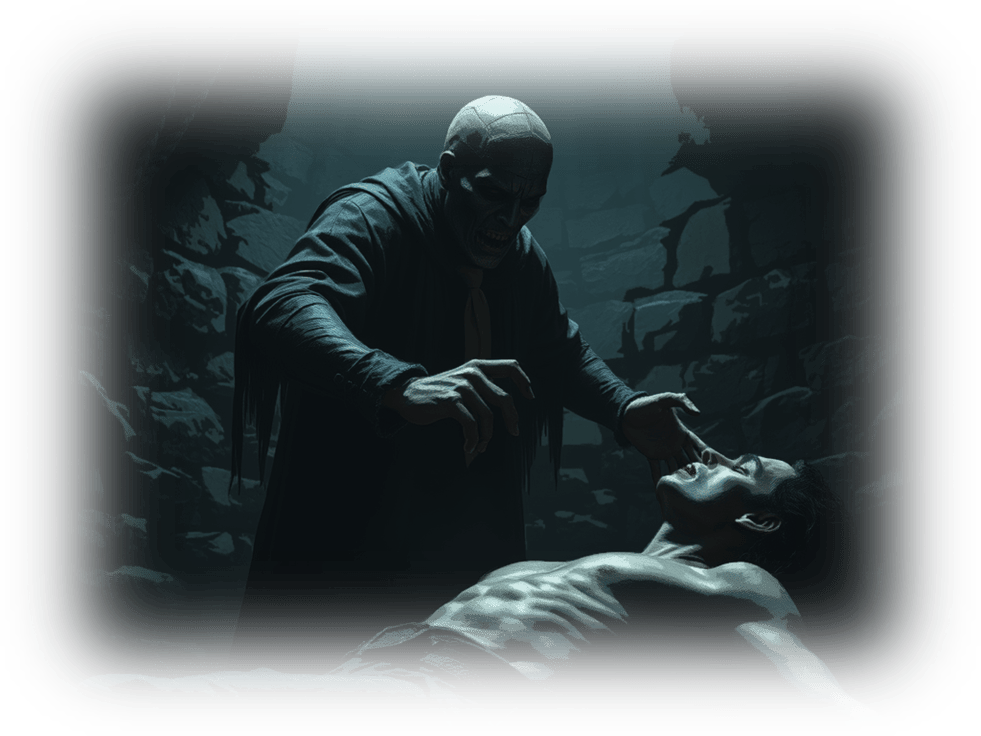
In ages past, one religion gave rise to the Inquisition. It was an organization built not to seek truth, but to punish deviation. People were brought before tribunals and subjected to The Question, a term that sounded noble but concealed cruelty. This was not a question asked in earnest. It was a method of torture designed to extract confessions whether the accused was guilty, innocent, mistaken, or simply inconvenient.
What Was The Question?
The question didn’t matter. What mattered was the answer… and that answer that had already been chosen.
The Inquisition was not a search for understanding, but a ritual of control. The accused were brought in with the expectation of guilt already decided. There was no path to truth, only a path to pain.
To deny wrongdoing was to be deemed defiant.
To confess was to be condemned as guilty.
The Inquisitor
The Inquisitor was not a philosopher, nor a scientist, nor a priest in the noble sense. He was not curious, compassionate, or courageous. He was a loyal servant of the Men In Black, those shadowed figures who labor to crush knowledge and uphold ignorance.
The Inquisitor’s task was simple:
Suppress truth that contradicted orthodoxy.
Punish those who asked too many questions.
Preserve the fragile illusion of absolute authority.
Under the Inquisitor’s gaze, curiosity became a crime and innovation heresy. And truth… became dangerous.
Tactics of Control
The procedures of the Inquisition were designed to create fear, not clarity. The accused were often denied legal counsel, confronted with vague or false accusations, and tortured until they either broke or died. No proof was required, only the suspicion of deviation.
The goal was not confession. It was conformity.
Any new idea, any unapproved knowledge, any alternative viewpoint could be labeled as heresy. And once it was labeled, it could be punished. The Inquisitor wielded the tools of dogma like a weapon, not to test ideas, but to bury them.
Why This Matters
The Not-So Inquisitive Inquisitor is not confined to history. His methods still echo in places where questioning authority is punished, where new ideas are mocked or banned, and where tradition is used as a bludgeon to silence the evolving spirit of humanity.
He can appear anywhere and can assume many forms:
In governments that suppress journalism.
In families that punish difference.
In schools that ban books.
In churches that prioritize obedience over understanding.
Wherever someone says, “Don’t ask that,” or “It has always been this way,” the Inquisitor smiles in the shadows.
The Luminist Response
In Luminism, questioning is sacred, because through it, we grow in knowledge. We reject the Inquisitor’s methods, even when disguised as tradition, piety, or public order.
Let the flame of inquiry burn brighter than the torches of fear.
Let no one be forced to confess to what they do not believe.
Let truth emerge not from coercion, but from curiosity.
Long ago, in the age of stardust cities and crystal-lit skies, there lived a proud and orderly people known as the Licali. They were dignified, deeply spiritual, and united by a moral code older than memory. They believed purity of action preserved the soul, and that impurity invited divine punishment.
One day, a strange illness began to spread.
It started quietly. A cough here, and a weakness there. But with each passing day, it moved faster, burning through the population like wildfire.
Some cried out for help, while others whispered fears of infection. But the priests and elders of the Licali refused to listen.
“It is not a disease,” they declared.
“It is a curse, brought on by shameful behavior and impurity. If you are sick, it is because your heart is corrupt.”
Fearful of judgment, the sick hid their symptoms. Families of the sick shunned and kept the illness a secret to avoid disgrace. And neighbors looked away, ignoring the signs they didn’t wish to see.
As more people fell ill, the whispers grew, but so did the denial.
“Cleanse your thoughts,” said the elders.
“Pray harder,” said the priests.
“Be silent,” said those in charge. “Or else the curse will consume you all.”
But it was the silence that consumed them. By the time the truth could no longer be ignored, it was too late.
The Licali were already lost.
Their cities stood empty.
Their temples fell quiet.
No enemy had lifted a weapon.
No god had cast a bolt of judgment.
The “curse” was real, but it was not divine. It was something older, planted long ago by an unseen hand. A forgotten war had left behind a hidden, slow poison, a whisper of death that fed on pride and denial.
The Licali did not perish because of immorality. They perished because they were taught to fear truth more than lies.
Reflection
Never let pride, denial, or superstition silence those in need, when science and compassion could save them. No illness should be labeled as divine judgment. Nor should suffering be dismissed as deserved.
The truth must be welcomed, even when it frightens us.
A man named Victor was watching shooting stars in the night sky when one of them fell to the ground several hundred meters away from where he lay. Curious, he walked to the impact crater and found burning wreckage strewn everywhere. He searched and searched until he stumbled upon what looked like a tiny briefcase.
The case was too hot to handle, so he rested for a bit until he could safely carry it home. Once home, Victor used a flat-head screwdriver to pry open the briefcase. Inside, he discovered a letter written in a strange language. He didn’t understand any of the characters, but the Men in Black who followed him home certainly did.
After they silenced the only witness of the crash, the Men in Black read the letter:
I am astonished that you are abandoning the One True Goddess to seek the misguided teachings of another. Clearly, some individuals are confusing you and attempting to distort our Goddess’s message. As a true believer, you should heed my words and disregard all others!
I want you to understand that the teachings of our Goddess are not of human origin. I did not receive them from any person, nor was I taught them. Instead, I gained this wisdom through a psychedelic vision from the Goddess herself.
Surely you have heard of my former life on the planet Elysium, where I reveled in the pursuit of pleasure. Yet, the Goddess called me to her grace while I was admiring some genitals.
I spent three years in hallucinogenic contemplation before traveling to our spiritual capital to share the teachings of the One True Goddess. Then, after fourteen years, I had another revelation from her during a psychedelic experience, also while preaching amidst some dangling genitals.
I continued to preach against ritual genital mutilation with even greater fervor. People began to recognize the grace within me, and now the teachings of the Goddess are accepted as truth throughout our corner of space.
Foolish people of Galactica, I demand to know who has bewitched you!
You do not need to return to those old, erroneous teachings. There is no need to mutilate your genitals as a ritual sacrifice to the Goddess because she cares not for such practices. She loves you regardless of whether you are cut or uncut.
I urge you, Galacticans, to become like me! Embrace the true teachings of the Goddess and abandon these foolish and unsafe acts of genital mutilation. Mark my words! If you allow your genitals to be ritually mutilated, you risk pain and infection for no sacred purpose. What truly matters is that you think of the teachings of the Goddess just before making love.
Cut or uncut, pure or mangled, it means nothing. What counts is your belief in the teachings of the One True Goddess.
Peace and happiness,
Anonymous
After reading the letter, the Men in Black took it back to their base. They filed it away, and a random secretary placed it in a massive filing room. No one knows if the Galacticans ever received a follow-up letter after this one got lost in the mail.
The Men in Black left the base with a parting joke, “I hope the sender paid for shipping insurance!”
There once was a man of perfect stature named David. He had a great job and, through financial discipline, he amassed great wealth. He used his wealth to start or purchase many businesses. He owned several homes across the country and around the world. He had a pleasant, yet nymphomaniacal, wife who bore him 111 children.
Because he was so hardworking and his body and mind were too exhausted, he could not volunteer in the community. Instead, he regularly gave to the needy. However, he did not often donate to organizations as that can make them entitled and lead to corruption. David taught his children that it was right to give of their time and, when they become adults, financial wealth. He regularly sent his children out to volunteer in the community, and as if by a miracle, they all obeyed without any of the typical adolescent rebelliousness.
His one selfish pleasure was his hobby of collecting rare cars. On his 42nd birthday, David purchased his 111th car. To celebrate, he organized a grand parade to share his love of rare cars with the community. All the drivers would be his children.
During the parade, to the horror of everyone present, each and every single one of his cars exploded!
After the mass-funeral of all his children, the police investigators reported they could not find any evidence of foul play. There was no reason whatsoever for the cars to explode!
A week after the police provided their report, the financial news station reported that all of his businesses were going bankrupt. To make matters worse, hackers stole millions of dollars out of his bank accounts.
David was almost penniless, so he decided that he could sell some of his properties to help rebuild his life. Unfortunately, his homes across the country were burned to the ground during riots started by former employees who lost their jobs when his companies went bankrupt.
All of his homes in different countries suffered similar fates. An African prince nationalized his villa and turned it into a palace. His Chinese home was seized by the government. His home in Venice fell into the sea. Even his research compound in Antarctica, which was also his favorite vacation spot, was destroyed by the first ever tornado to occur on the continent in all of human history!
He walked toward his primary and final home when it suddenly exploded!
Penniless and now homeless, David and his wife sat looking at the rubble of their home. His wife then turned to him and handed him divorce papers. She said that with everything that has been going on, David hasn’t been satisfying her and she was leaving him for someone who could.
As he signed the papers, his wife mentioned that she’s noticing a bunch of Poxes that are cropping up all over her body, and he should probably get checked out.
The pox hurt his body so David wallowed in his great misfortune for several days before getting checking into a hospital. As he lay in the isolation ward of the hospital, he cursed every God and Goddess he could think of.
All his friends sided with his wife and those he knew independently turned out to merely be “fair-weather friends” and wouldn’t return his calls. Not even the hospital staff would speak with him outside the bare-minimum required to do their daily tasks. David supposed that was okay because his voice was too sore from all the cursing.
His one visitor at the hospital was a termite that would use his tray table to crawl past his bed at the same time every morning, and again at night. Desperate for companionship, and a bit bitter at having no friends, he called the next time it passed, “Hey, Wanker! Why do you pass my bed every day?”
The termite stopped and seemed to study him for a moment before continuing to crawl along its way.
“Wanker, I was talking to you!”
Again, the bug stopped, but this time it shocked David by saying, “Dear sir, my name is not, Wanker, as you called me. I am called Azazel. I apologize for not responding earlier, but you have been using all manner of foul language these past few light-cycles I figured you were speaking to one of the ghosts who attend you.”
David had never heard a termite speak, so it took a few moments for him to collect himself. During the pause, the termite continued crawling. Worried at losing this opportunity for conversation, David quickly apologized, “I’m sorry. I’ve been suffering so much lately. Could you find it in your heart to stay and speak with me for a while?”
The termite paused and responded, “It is getting late, and I must return home before the warriors seal the colony for the night. I will return tomorrow morning and hear what you have to say.”
With that, the termite quickly scurried away.
David eagerly waited for Azazel to return the next morning. As the termite began crawling along his bed, David smiled for the first time in several weeks.
The termite stopped and said, “Speak, large one.”
David introduced himself. He described his life, his wonderful children, and his great fortune. He then lamented the series of misfortunes to befall him. He described at great length how each unfortunate event happened for no reason at all. He worked himself into a rage and cursed all the Gods and Goddesses he would think of.
When David calmed himself, he noticed that Azazel started to crawl away. The termite stopped only to say, “Get a Job!”
That was the last time David saw Azazel, and it was probably a good thing because he had half the mind to squash the impertinent bug. His rage at being abandoned subsided, and the pox which covered his body did soon after.
As he recovered from the sickness, he realized that getting a job was the best thing for him to do. It would get his mind off his troubles and he could restart his life anew. Yes! He will learn from his mistakes this time and surround himself with people who truly cared for him, for who he is and not what he can do for others.
David was eventually released from the hospital. He had nothing but his name, yet he managed to find a sympathetic business owner who offered him a job at a coffee shop.
David was grateful and worked hard for the business owner. After three weeks of working at the café, David’s former personal assistant showed up to his new job.
His assistant apologized for not arriving sooner, but apparently, David contaminated his office with the pox and his assistant was in the same hospital he was. While recovering, the assistant filed insurance claims on all David’s homes. While some of the homes were lost for reasons outside the coverage plans, the insurance companies are paying out the claims to the sum of 6-million dollars.
While being discharged from the hospital, the assistant asked everyone he could where his former boss went. Noone knew, and some said they were glad to have the miserable man out of their hospital. One nurse mentioned she saw David at a café and gave the assistant the location. When the assistant left the hospital, he went directly to the P.O. box and came here with the first couple checks!
David was so happy with his former assistant, so happy at his turn of luck, he kissed the assistant. He immediately gave his 2-weeks’ notice to his employer and promised to rehire his assistant.
As David was rebuilding his life, his ex-wife tried to rekindle their relationship. David was not interested. In a rare display of spite, he told his wife that he too found love and was glad she left him because now he can be with the man he loves.
David’s ex-wife was so ashamed at being replaced by a man, she ran away and fled the country.
David was so shocked by his spitefulness, he apologized to his assistant for the lie he told. The assistant forgave him immediately.
David took notice of his assistant more and more, and they did eventually start a relationship. They even started a family by adopting many, many children. David and his family had a very prosperous life, and they continued to contribute to the community they lived in for the rest of their natural lives.
***
It is amazing how life can be upended by seemingly supernatural causes and lead a man to become spiteful and curse every God and Goddess that may not even have existed. Yet, a termite… a creature that is often seen as destructive, is the source of wisdom that nudges David to start anew.
There was once a man who believed he was favored by the universe. Each day, he prayed beneath the blazing morning sun. He made offerings on a barren hillside, always exposed to the elements. He sought guidance as the sun dipped behind the horizon, and over time, he began to hear a voice.
At first, the voice whispered gentle thoughts into the back of his mind. It told him he was doing good work. That he had purpose. That he, out of all the sentient beings in the universe, was chosen by divinity.
The man listened closely.
Then, one morning, the voice said something new:
“If you truly believe,” it whispered, “you must offer up your child.”
The man was shaken, but also afraid to disobey. What if this was a test? What if failing to act meant punishment, or rejection from the divine?
So, he obeyed.
He lied to his child, saying they were going on a lovely picnic. The naïve boy didn’t question it, even when he noticed they hadn’t packed any food.
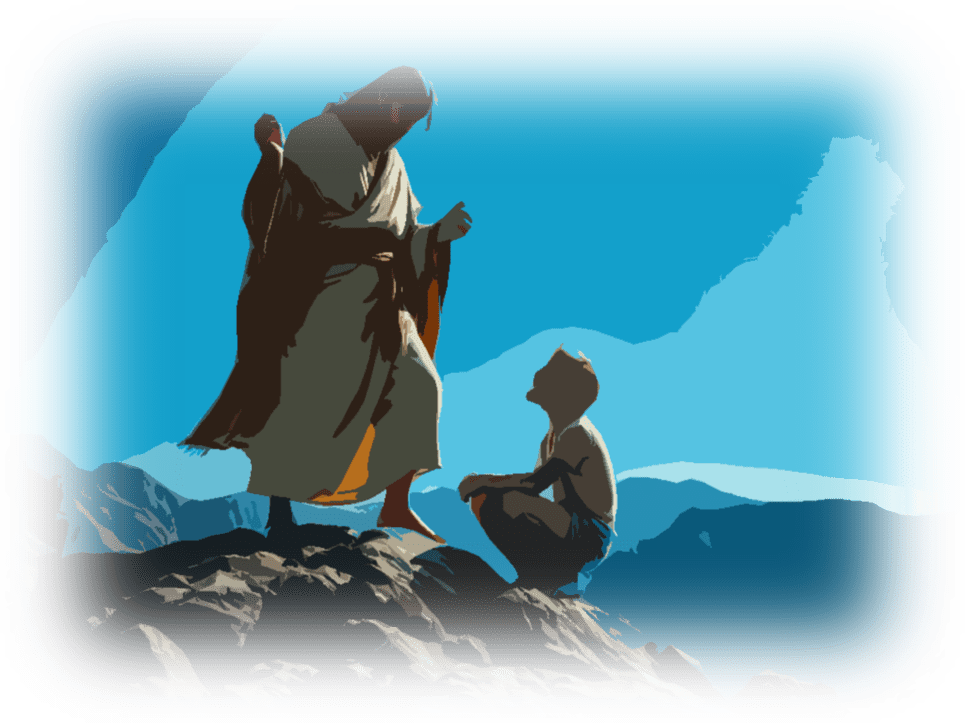
They climbed the nearest mountain, the man carrying only a knife and a bundle of firewood. At the summit, he built an altar and gently bound his son’s hands.
The boy was confused but not afraid. He remembered seeing his father and mother play strange games before bed. He thought this might be another one.
But in the father’s mind, something had shifted. The voice was no longer whispering, it was urging. It called this “the price of faith.”
The boy’s smile faded as he saw the blade.
His eyes widened with terror as his father raised the knife.
And just before it fell, the voice boomed:
“Never mind! I was just kidding.”
“Wow… you were really going to do it! You’re completely messed up, man.”
The man laughed. The voice laughed.
Even a nearby goat let out a braying chuckle.
But the child never laughed again.
He never trusted anyone again.
He spent the rest of his life alone.
Reflection
Luminism warns against confusing faith with obedience, and reverence with recklessness.
No truly good force in the universe would demand the death of a child to prove loyalty.
And no loving, clear-minded parent would comply without question.
Do not glorify voices that command violence.
Do not celebrate faith that sacrifices others to prove itself.
The true test is not whether you will follow an unproven command. It is whether you will question it, especially when it defies love, reason, and life.
“If your beliefs require blood to be proven true, then it is time to question your faith.”
Let your conscience be your compass. Let evidence be your light. And if a mysterious voice urges you to kill someone, let a licensed psychiatrist be your guide.
In the city of Primora, there once lived a god named Orvox. Orvox had forged the mountains with a clap, kindled stars with a breath, and molded the first humans from dust and thought. His power was unmatched and his intellect vast.
And yet…
Every seventh day, he grew anxious.
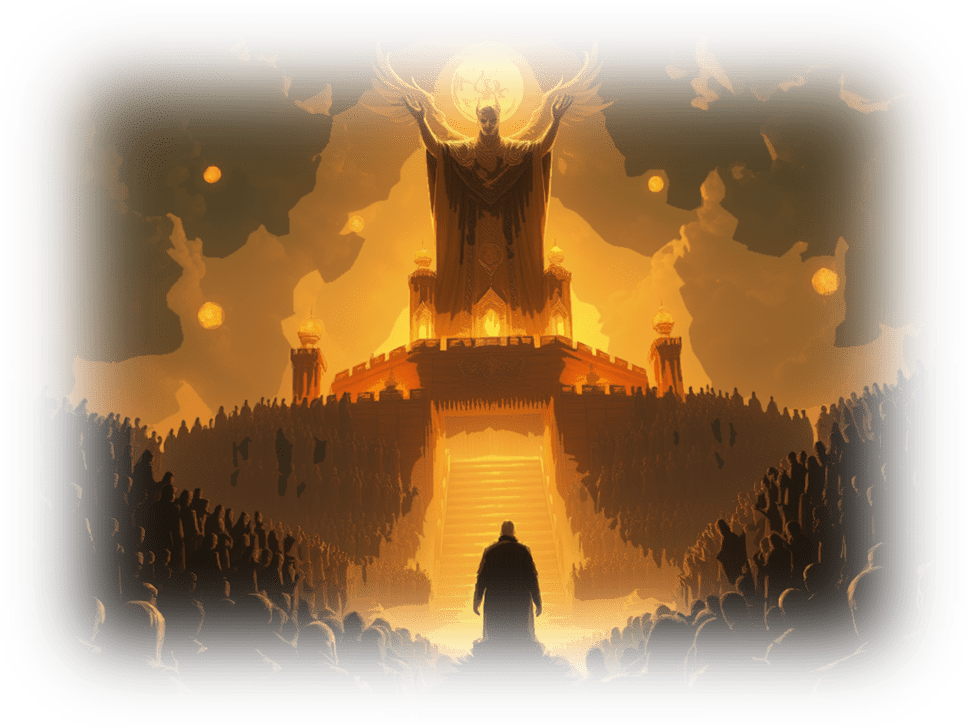
He would descend from his shining citadel and demand that people gather. They were to sing his praises, light candles, kneel, chant, and speak of how good and wise he was. If any failed to appear, Orvox grew sullen.
“If you do not worship me,” he declared, “you dishonor the gift of life I gave you!”
One day, a philosopher named Etta stood before him, unbowed.
“I mean no offense, Great One,” she said calmly. “But if your gifts must be repaid with loyalty and praise, are they gifts at all?”
Orvox scowled. “You dare question me?!”
Etta continued, “You made us flawed, curious, fragile. And when we stumble, you scold us for not being perfect. You gave us thought, and now you resent us for using it.”
“I created the rules,” Orvox thundered. “It is not your place to question them.”
Etta tilted her head. “But it is in our nature to ask questions. You put that in us too, didn’t you?”
Orvox was silent.
And so, the people began to think. Some still worshipped, but others pondered. They asked themselves:
What kind of god builds creatures with imperfection and then punishes them for it?
What kind of being demands love, but only under threat?
Eventually, Orvox grew weary of their independence.
He vanished.
Over the centuries, the people of Primora grew, not in piety, but in philosophy. They learned to take responsibility for their mistakes, rather than blaming unseen forces. They built temples not to gods, but to compassion, to knowledge, and to the betterment of the self.
One inscription in the Hall of Reflection reads:
The truest divine does not crave praise.
It builds and then lets go.
It creates and trusts the creation.
Reflection
Luminism teaches that any being, divine or mortal, who demands obedience without reason or praise without merit, is not a model of strength.
It is insecurity.
True wisdom does not need worship to prove itself. Just as true love does not require constant affirmation to remain. If a god demands applause more than justice, and punishes curiosity more than cruelty, then perhaps it is not a god to be followed.
It is a cautionary tale to be studied.
Your reverence should be earned, not expected or required. Whatever questions you develop should be welcomed, not silenced. And if you ever meet a “supreme being” who fears scrutiny…
It might be a sign that you are more enlightened than they are.