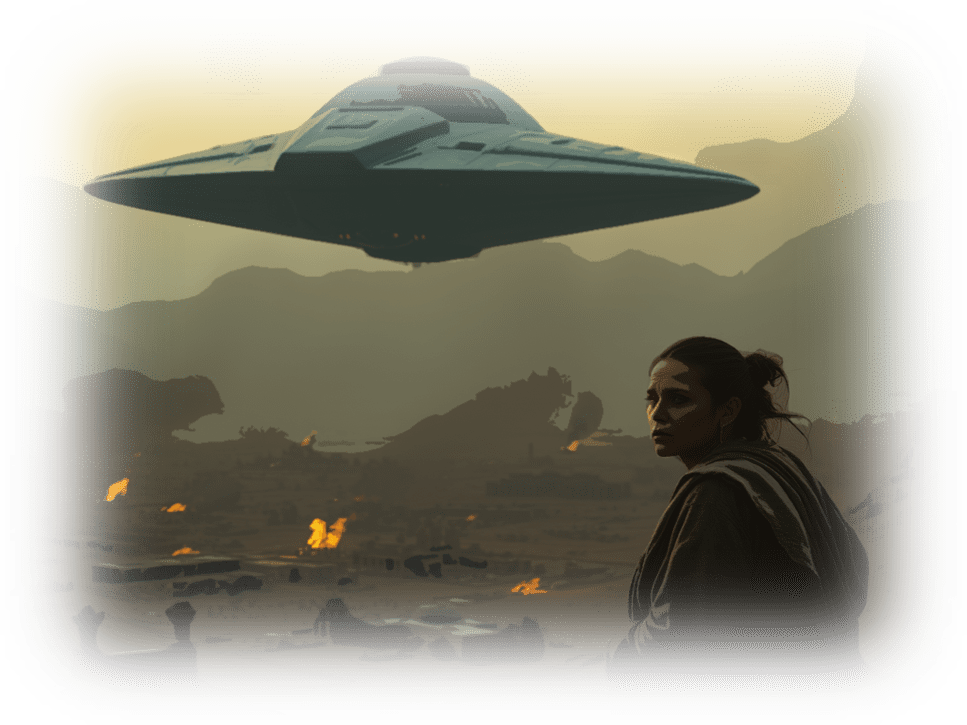
Luminism is a modern philosophy and religion of reason, compassion, and moral clarity. It teaches that goodness stands on its own… not on dogma, not on fear, and never on threat of divine punishment.
Saul was a religious zealot, employed by the government as an informant to persecute people of other faiths. His relentless devotion to rooting out religious minorities knew no bounds. He consistently tormented them with malicious intent, raiding homes and dragging entire families to prison. Saul was also a regular attendee at executions, especially stonings, though he never participated directly due to his weak throwing arm. Despite never physically killing anyone, Saul’s actions condemned countless individuals to death, and his hands were forever stained with the blood of his victims.
One day, Saul prepared for a journey to arrest a group of religious pilgrims in a distant city. Fueled by excitement, he barely noticed a house fire as he passed. When he did, he realized the home’s owner displayed symbols of a minority faith. Seizing the opportunity, he approached to make his first arrest of the day.
Unbeknownst to Saul, the homeowner was an alchemist. Chemicals from the burning house released toxic fumes, which wafted into Saul’s face. At first, he was unfazed, but the smoke soon overwhelmed him. Gasping for air, he collapsed, clutching his burning eyes.
The man he had intended to arrest rushed to his aid, pulling him away from the smoke and guiding him to fresh air. Temporarily blinded, Saul relied on his would-be prisoner to lead him to a healer in a nearby city.
The healer, a member of the same faith Saul persecuted, treated him with kindness, rinsing his eyes with saline and feeding him anti-inflammatory herbs. As part of his ritual, the healer also prayed over Saul.
As the herbs took effect, Saul drifted into a deep sleep and dreamed vividly. In his dream, he saw the faces of those he condemned, heard their cries for mercy, and felt the weight of their suffering. A man’s voice echoed through the dream: “Saul, why do you persecute us?” Though he never seen the man before, Saul instinctively knew it was the healer treating him.
The next morning, Saul awoke and removed the bandages from his eyes. His vision was restored and his first sight was… a chamber pot. Once relieved, his second sight was the healer, who looked exactly like the man in his dream.
Overwhelmed with gratitude and guilt, Saul confessed his evil deeds to the healer. He spoke of his past deeds, his hatred, and the harm he caused. Moved by Saul’s contrition, the healer explained how he may seek redemption. To make amends on this world he must renounce his old ways, embrace the faith he once sought to destroy, and accept the sacrifice of a divine figure who absolved humanity’s fall from grace.
Saul underwent a baptism to cleanse himself of his past. To complete his reinvention, Saul changed his name to Paul, which served as a cloak for his prior evil deeds.
As Paul, he traveled the world, spreading the faith he once tried to erase. He became a prolific preacher and writer, penning letters that shaped the doctrines of his new religion. However, his new life was not without hardship. Everywhere he went, Paul faced opposition. He was beaten, imprisoned, and threatened with death.
Despite his new name and identity, a former associate, recognizing him and turned him in to authorities. Paul demanded his case be heard by the Cesarean Section Council and he was taken to the regional capital. The council was led by a follower of Ipusa, a god who despised traitors and shapeshifters.
Paul was harshly judged for betraying his original faith and was sentenced to public disintegration. His execution aired on primetime news, where he dissolved into light to the sound of roaring applause.
In the afterlife, Paul faced judgment. A voice echoed through the void, recounting his deeds. Though he had tried to redeem himself, the weight of his early atrocities overshadowed his later good works.
The narrator’s stern voice boomed through the void to pronounce a final judgement upon his soul. “Despite shedding your name and claiming redemption, your deeds, and the intent behind them, cannot be washed away. For your consistent harm to others with malicious intent, your soul will be deleted. You are undeserving of existence.”
And so, Paul was erased.
Despite his grim end, Paul’s teachings endured and helped shape his faith into a dominant religion. Ironically, he became one of its most celebrated figures, his legacy living on long after his soul’s deletion.
About fifty years after departing to spread the Nine Please Principles throughout the known universe, Angelica returned to see what had grown from the seed she had planted on this world.
She was traveling with her adolescent son, who was recently conceived with a lover… though “recent” is relative when one lives for seven thousand years. On this voyage, she intended to teach him how choices ripple outward through time. She explained how her ship had once crashed here, and how a primitive local man had helped her crew to safety. In return, she had freed his people from slavery.
Her son asked if those people had deified her. Angelica shook her head.
“No. The man I helped knew my work was done with technology. He already had a religion, and he used it to cement his authority over the freed slaves.”
She paused, watching Earth grow larger in the viewscreen, recalling that night on Mt. Cyanide. “I was concerned about the direction he wanted to take his people. I wanted no part in aiding him in a genocidal holy war.”
Her son gave a knowing look. “This will be interesting.”
When they entered Earth space, a patrol ship scanned them for contraband and logged their purpose with local authorities. Angelica declared their visit an educational expedition to study how primitive cultures develop and how moderate interference shapes them over time.
Cleared to proceed, they descended toward the “Promised Land” her former friend had once spoken of. While cloaked, her ship scanned villages and towns for genetic markers linked to the former slaves. They were scattered, but she chose a landing site near the Egyptian Empire.
Disguised as nomads, she and her son interviewed villagers along the border. They heard troubling tales of a nomadic nation that had passed through a decade earlier. Many city-states had allowed them passage, while others had resisted and had been utterly annihilated, every man, woman, and child killed.
As they traveled, the pattern became clear. The former slaves had destroyed and pillaged their way toward their promised land, eradicating seven nations in the name of their god.
Angelica saw the worry on her son’s face and felt shame. Her well-intentioned good deed had contributed to this devastation. “We must learn more about what happened,” she told him, “and fix it.”
***
Days later, they found her former friend preparing to cross a river for another invasion. Though older, he had not aged as much as most of his people, some of whom likely died of old age. Beside him stood a man who, from a distance, looked like a Federation citizen.
That would explain the slowed aging, Angelica thought to herself.
The stranger’s gaze reached Angelica, and his eyes widened at the sight of Angelica, then narrowed in recognition of a fellow Federal citizen. His hands began to move in strange, pointed gestures. Her son noticed and whispered, “He must have one of those new command computers with a single-sided holographic display. Clever!”
“Quite clever indeed,” Angelica replied. “To these primitives, it looks like he’s casting a spell. But I’m sure he’s running a records search to find out who we are and where we’ve been.”
“So, he knows what you did?”
“He will by the time he greets us,” she said. “Be prepared for anything… even my arrest.”
“What? Arrest?!” Her son asked, with concern.
“Shh!” She nodded toward the now-approaching man. “I’m sure he’ll explain everything. A man like him probably enjoys hearing himself talk while he gloats.”
The newcomer introduced himself as a Federation scientist studying the indigenous population to observe their reactions to exotic materials. He heard tales of a bizarre slave revolt involving several plagues and the destruction of Pharaoh’s largest army.
“With so many wild stories coming out of Egypt, I had to investigate,” he said. “The Egyptian accounts made me suspect that one of our kind helped their slaves escape. And when I finally found the freed slaves and saw this-” He held up a compact food replicator, “my suspicions were confirmed.”
He continued with a smirk, “The Federation does not look kindly on those who intentionally contaminate primitive worlds with advanced technology.”
“Oh, spare us the holier-than-thou routine,” Angelica said sharply. “I know you’re not exactly working within Federal law either. Otherwise, why would you keep aiding them? And I can clearly see you gave their leader anti-aging treatments.”
She gestured toward her former friend, still preaching nearby. “Care to share your permit for that kind of prolonged ‘research’?”
The man only smiled.
“I didn’t think so,” she said. “So, what exactly are you doing with these people? When I left, they were walking into the desert. I gave them that ‘magic stone’ so they wouldn’t die there.” She nodded toward the replicator. “It should have run out of power decades ago. And why does he still look young when everyone else I helped has died?”
“I had a hand in that,” the scientist replied. “When I found them, I saw that one of our kind had helped them escape Egypt. Since their development was already interfered with, I decided to conduct an experiment.”
He gestured toward the surrounding people. “I kept them in the desert for decades. When they neared its edge, I would whip up a sandstorm to push them back. Once, I even put them in hibernation and returned them to the center of the desert. The data I gathered…”
He ticked off points: “Their willful dependence on a magic rock for nourishment. Their blind faith that a god watched over them. The hardiness and discipline forged by the desert. The training regimen I gave them to mold a massive army of fanatics seeking a promised land, now within sight.”
He smiled coldly. “Your ‘friend’ was all too eager to do my bidding, and it was his idea to slaughter every outsider along the way. One primitive savage is much like the other, so I saw this as a waste of time and effort, but he insisted.” With a thoughtful shrug he continued, “In a way, it’s smart. Remove the indigenous population and plant your own colony without the distraction of assimilating another culture. I might even suggest it to the Federation Navy someday.”
“Perhaps I will introduce them to the doctrine first-hand when I-“
Angelica’s son returned, carrying three mugs of hot tea. He offered one to his mother and one to the scientist.
“Oh, such good manners your son has,” the man said, sniffing the tea. “Is this spice-herb from Elyria?”
“Yes. I brought some to drink in private,” Angelica replied, giving her son a pointed look that said he shouldn’t have shared it. “But seeing another Citizen must have reminded him of proper hospitality.”
He took another sip, basking in its aroma and flavor. “It’s been years since I’ve had Elyrian spice-herb. Thank you, son, for this kind gift.”
He paused to appraise the boy, “It’s too bad that I’ll have to kill you both. I just can’t risk you spoiling my plans.”
A rough cough broke his words.
“Excuse me. Sometimes the dry, dusty air gets to me.”
He coughed again, this time harder, before continuing. “Having such respectful youth as you is a delightful surprise. But-” Another cough, then a rasp. “It’s time to die.”
The coughs deepened into choking. His eyes locked on the “polite” boy with sudden horror, and in that same instant, Angelica realized what her son had done.
The man roared in rage and yanked a standard Federal laser pistol from his belt, but the poison was already freezing his muscles. The weapon slipped from his grasp and clattered to the ground, followed swiftly by the man himself.
“A surprise indeed,” Angelica said evenly as he lay gasping for air.
She turned to her son, her expression a mixture of shock and faint horror, as the poison finally stilled the Federal’s heart.
“He said he was going to use these people to do even more evil,” her son said, his voice tight. “I had to stop him. I could sense he was going to kill us. And his own words suggested he planned to use these people to attack the Federation garrison here. It was my duty to sto-”
“I know, son.” Angelica drew him close. “It was necessary.”
That night, she went to the tent of her former friend and found him weeping over the loss of his source of power. Angelica felt no sympathy.
She pointed at the dead Federal lying nearby. “Join me, or join that man in death. I will give you one day to say goodbye and name a successor.”
She hurled the compact replicator onto the ground. Its internal components shattered with a sharp crack.
“Tell your people you are being denied entry to the Promised Land because, instead of speaking to the replicator- your ‘stone’ to bring forth water, you struck it. This act of abusive disobedience is why you will go no further.”
Her gaze was cold and unyielding. “Say that to your people. But you and I both know I am punishing you for twisting my good deed into something evil.”
The man chose death.
He walked out into the desert alone, leaving his people behind. Angelica lifted her ship into the air and followed from above. When he had reached a safe distance, the purifying light of a particle beam cannon at low setting washed over him.
There was nothing left.
***
But the damage was already done. His successor continued the invasion, and the genocide.
Angelica could not bear to watch, and left the planet.
From time to time, her son made discreet inquiries to the local garrison. On one occasion, they reported a single, small good that had come from the Federal Citizen’s interference.
During their campaign, the former slaves encountered a rogue AI ruling a sizable kingdom. The AI had given its people order, taught them how to build better tools, and shared knowledge of locating rare and valuable resources. In return, the locals worshiped it as a god and obeyed its command to conquer the planet.
The two peoples clashed, and the former slaves prevailed, destroying the AI. Unfortunately, none of the AI’s subjects, nor the knowledge and skills it had imparted, survived.
The victors slaughtered every last man, woman, and child.