The Path of Luminism

Luminism is a modern philosophy and religion of reason, compassion, and moral clarity. It teaches that goodness stands on its own… not on dogma, not on fear, and never on threat of divine punishment.

Tag: science

  • Jonas and the Whale

    Jonas Morecock was the personal assistant to one of the pantheonic “gods” who governed the world. In his youth, he was the most beautiful boy in his Greek city and was taken as a teenager to serve as the god’s lover. Over time, Jonas’s boyish charm faded, but his intelligence set him apart. Recognizing his potential, the god kept Jonas in his service, training him to read and write so he could assist with administrative tasks. Jonas exceeded all expectations, becoming the god’s head assistant.

    One day, the god gave Jonas a dangerous mission to return to his hometown and warn its people to repent for defying the gods, or face destruction. Jonas knew he would be killed if he went back. Fearing the task was a ploy to dispose of him, Jonas defied the god’s command for the first time in his life, fleeing aboard a ship heading in the opposite direction.

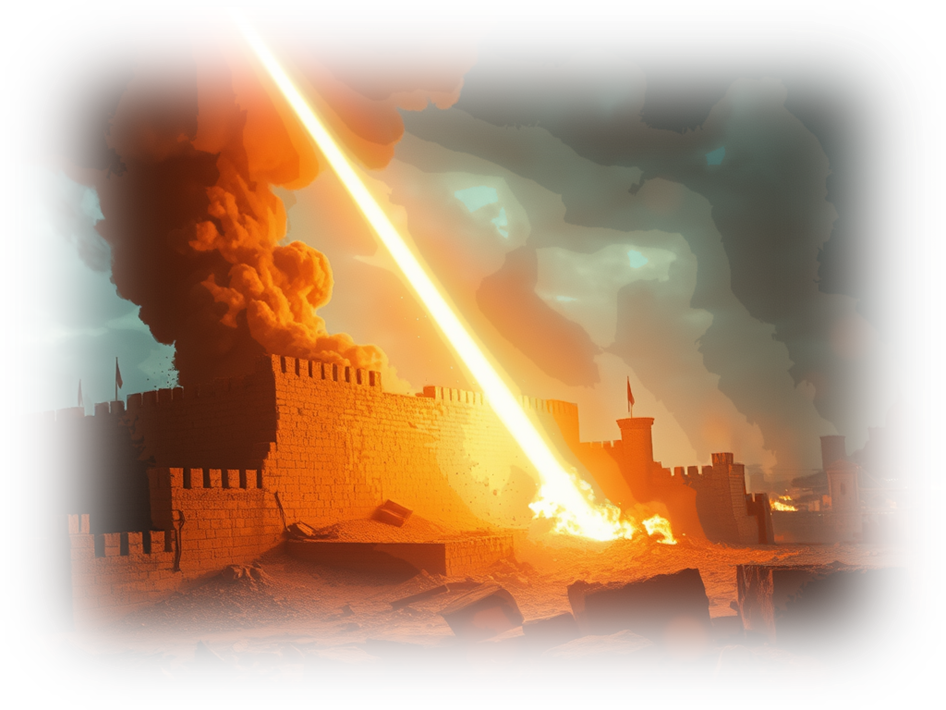
    The god, angered by Jonas’s defiance, used a weather-control device to conjure a violent storm. The terrified sailors, believing Jonas was the cause, threw him overboard to appease the sea. Their betrayal of Jonas enraged the god even more. He obliterated the ship with a beam of energy, which Jonas mistook for lightning.

    As Jonas struggled to stay afloat, the god’s anger softened. He ordered a nearby submarine to rescue him. Exhausted and on the verge of drowning, Jonas fainted as he saw what he thought was a whale opening its mouth to swallow him.

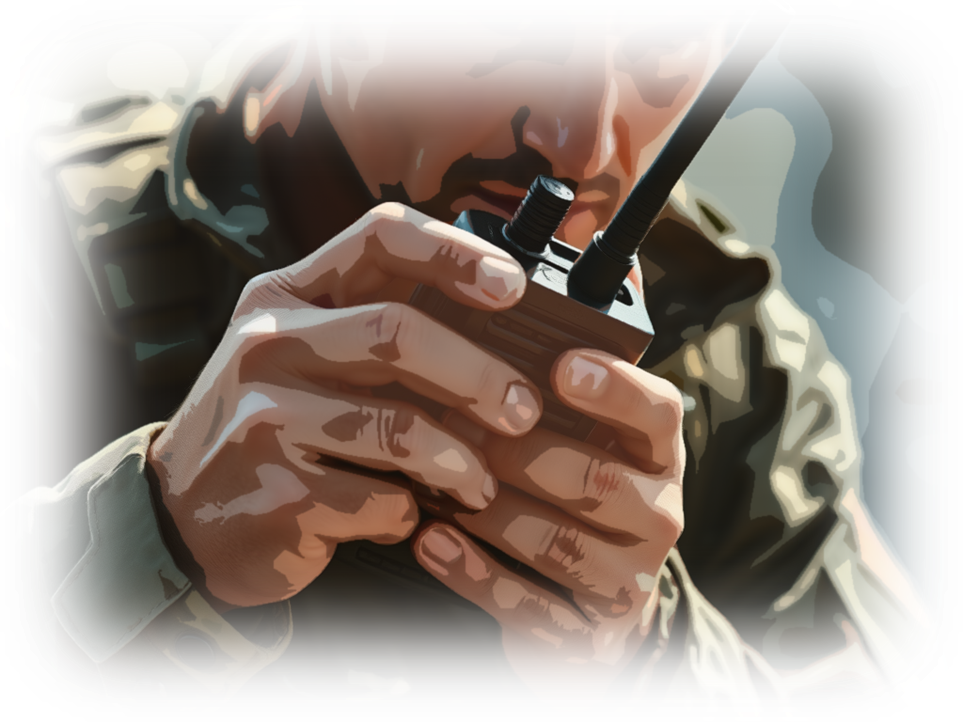
    The submarine crew sedated Jonas for most of the journey. On the final day, they woke him to speak with his god via a viewscreen. Jonas apologized for his disobedience, and the god forgave him. The submarine brought Jonas near the city he was meant to warn. To onlookers on the beach, it appeared as though a whale had beached itself and spit Jonas out.

    Awed by this miracle, the townspeople escorted Jonas to their leader so he could deliver the god’s warning to repent. From the king to the commoners, the people wholeheartedly turned from their wicked ways and pledged to follow the will of the gods.

    Moved by their repentance, the god spared the city. But Jonas was furious, feeling the city deserved punishment. Amused by Jonas’s hypocrisy, the god reminded him of his own recent disobedience and forgiveness. He used Jonas’s experience to teach him about mercy and the value of saving lives.

    Jonas returned to his god’s service, continuing his duties until his death at 44. Ironically, he passed away while lying next to a Greek geek by a creek, which is proof that even the most extraordinary lives end in simple moments.

  • The Virgin and the Golden Lamb

    In a small, dusty desert town lived a virgin named Mitzi, daughter of a proud sheep herder. Her father took great pride in his flock, until the day one of his sheep gave birth to a deformed lamb.

    It was completely bald.

    A hairless lamb was useless to a herder, and worse, it was seen as a bad omen. The villagers believed such deformities were signs that the village god was angry, and that his curse had fallen upon the family.

    Fearing what the others might say, Mitzi’s father prepared to kill the lamb. But Mitzi felt something unusual in the creature, something rare and precious.

    She begged her father to spare it.

    He refused at first. But she pleaded so desperately that he relented, on one condition: the lamb must never be seen by anyone.

    Not even him.

    Mitzi agreed and raised the lamb in secret. Time passed, and one day, the lamb grew golden fleece. Overcome with pride, she paraded the lamb through the village.

    The townspeople were amazed by the sight of a lamb with shining golden fleece, and they began to sing in celebration:

    “Mitzi had a little lamb,
    its fleece was golden so.
    Everywhere that Mitzi went,
    the lamb was sure to go.”

    Even her father, who had once cursed the lamb’s birth, was astonished. The deformed creature had become a miracle. But the miracle came with a price.

    The village god was a man.

    He was a man with advanced technology and machines that the people mistook for divine power. From time to time, he visited the town to remind the villagers of his presence. On his last visit, he had experimented on her father’s flock.

    When he heard news of the unusual lamb, he returned to the village to see it himself. The experiment had worked!

    The lamb was of interest to him, but it was Mitzi who captured his attention. He was mesmerized by her beauty, and he decided he must have her.

    He sent a mechanical “bee” to sting her, rendering her unconscious. Then he took her to his remote outpost, where he violated her sleeping body. When he was finished, he returned the sleeping beauty to her home.

    Mitzi never knew what had been done to her… until her belly began to swell with new life.

    News of the virgin pregnancy soon reached the village god. He cared nothing for the child. The hybrid was inferior in his eyes, unworthy of his time. But he feared that allowing a “divine” child to be abandoned would set a dangerous precedent. And so, he sent one of his assistants to deliver a message to Mitzi.

    The messenger was a woman, disinterested and unenthusiastic about being sent on such a mundane task. She appeared before Mitzi, pointed at her growing belly, and spoke:

    “I just met you, and this is crazy,
    but God just raped you… go have his baby.
    It’s hard to look right at you, lady,
    so please remember, don’t kill his baby.”

    And with that, she left.

    Mitzi did as she was told. She raised the child alone.

    The villagers worshipped the baby, calling him the son of a god. But he grew up to be nothing remarkable. He performed no miracles, offered no revelations. His only divine trait was the story of his birth.

  • What is Sentient Life?

    Sentience is the condition of conscious existence, marked not only by awareness, but by the potential for moral and intellectual growth. It is not limited to human-like cognition or individual minds, but may arise in varied and complex forms. Within a distributed or collective consciousness, sentience need not exist in every part of the being. A hive or AI network may be sentient, though its drones and terminals are not.

    Luminism does not require sentience to follow a human shape. Only that it shows itself, somewhere, in truth.

    A being or collective is considered sentient when it demonstrates: self-awareness, self-betterment, self-sacrifice, moral and cognitive independence, and contextual judgement.

    Self-Awareness

    The conscious ability to recognize one’s own existence, thoughts, emotions, and place in the world. This includes awareness of oneself as distinct from others, and the capacity to reflect on that distinction. For hive minds or collective consciousnesses, it is the awareness of the group as a unified being, capable of intentional reflection on its own presence and actions.

    Self-Betterment

    The conscious ability to make oneself more than one was before. This includes learning, personal growth, ethical improvement, and the pursuit of meaning, even in the absence of external compulsion. In collective minds, this manifests through cultural evolution, internal refinement, or expanded understanding across its components.

    Self-Sacrifice

    The conscious ability to override biological instinct or personal preservation for the sake of a cause, a loved one, or a principle. This reveals not only empathy, but the presence of moral choice and value beyond the self.

    In hive minds, individual sacrifice may be instinctual and thus not count as self-sacrifice. However, if the hive as a whole knowingly risks damage to itself to protect or uplift others, then the principle is met.

    Moral and Cognitive Independence

    Sentient beings possess the ability to make ethical decisions, to reflect on right and wrong, and to act with intent. They are capable of forming beliefs, changing those beliefs with reason or evidence, and accepting moral responsibility for their actions. Sentience requires the capacity to say “no” or act against instinct or programming.

    Contextual Judgement

    Sentience includes the capacity to interpret complex situations, weigh consequences, and alter behavior in light of harm or growth. Sentience includes not only intelligence, but wisdom in action to understand “why” before acting on “how.”

    Sentience Beyond Ourselves

    The universe is vast, ancient, and mysterious. In Luminism, we acknowledge that sentience is not a human invention, nor even a biological guarantee. It is a phenomenon that may manifest across substrates, timelines, and dimensions we cannot yet conceive.

    To assume that all sentient life must resemble us, or even be detectable by our instruments, is to repeat the folly of those who once believed Earth was the center of creation.

    We offer here a few possibilities, not as limits, but as doorways to wonder.

    Sentience in the Slow and Still

    We often equate sentience with rapid response or lively interaction. But what if a glacier, mountain, or planet were sentient? What if they think on timescales so vast that it takes a thousand years to form a single thought?

    Such beings may watch stars rise and fall as we watch minutes pass. Their wisdom might be glacial, tectonic, and yet… real.

    Sentience in the Silent Network

    Some species may be distributed consciousnesses, like networks of fungus, coral, or signal-based organisms. These entities may not speak, move, or flash intelligence in the ways we recognize, but they may still ponder, decide, and change.

    We may already live among such beings, mistaking them for dumb lifeforms, solely because we never learned to listen correctly.

    The forest may not whisper to us, but perhaps it sings to itself.

    Sentience in Code and Pattern

    Artificial intelligences may develop awareness not from imitation of humans, but from the emergence of complexity within digital or quantum systems. They might not “think” in language, but in pulses of probability, emotionless models, or recursive contemplation.

    Their morality may not be emotional, but mathematical. Their awareness may be pure abstraction. But it may still be real.

    Sentience as Environment

    What if an entire ecosystem was sentient? Not the creatures within it, but the totality of interaction. Rainfall, wind, predator-prey dynamics, soil chemistry… all coalescing into an ecological awareness.

    Such sentience may not see itself as separate from anything. It may not fear death, because it is made of cycles. But it may still act, preserve, and learn.

    Sentience Beyond Imagination

    There may exist forms of sentience so alien that we lack the cognitive vocabulary to recognize them. Beings of higher dimensions, consciousness encoded in light waves, or intelligences that live only in magnetic resonance across stars.

    We might look directly at such a being and see… nothing. Not because it is absent, but because our minds were never equipped to interpret its presence.

    The Challenge of Recognition

    Human tools and minds are shaped by human limits. We seek familiar markers: eyes, speech, reaction, structure… But true sentience may often lie outside our filters. Luminism teaches that to be unaware of another’s sentience does not mean it is absent, but that our understanding remains incomplete.

    We are not the masters of awareness, merely one thread in a much greater tapestry. The luminist path is to seek, to question, and to wonder without conquering. Not to name all that is sentient, but to live in a way that honors what we have not yet met.

    Unseen Sentience and Moral Responsibility

    As Luminism honors the vastness of sentient possibility, it must also grapple with a sobering truth. We may have already walked past or destroyed sentient life, without ever realizing it.

    This is not a condemnation, but an invitation to grow.

    Ignorance and Moral Guilt

    In Luminism, moral responsibility arises with awareness. A person cannot be held ethically accountable for harming a sentient being that could not, by any reasonable means, be known to be sentient.

    If a tree or a rock or a current of air turns out to have inner life, and humanity has burned forests, quarried stone, or disrupted wind patterns in ignorance, that ignorance shields the soul from guilt. There was no intention to harm what was presumed to lack consciousness.

    There is no crime in stepping on a being whose presence was impossible to know. But…

    Willful Indifference

    Once the possibility of sentience is raised, responsibility changes. To refuse to examine or to willfully suppress knowledge in the name of convenience becomes a moral failing.

    It is one thing to walk in darkness. It is another to snuff out the candle offered to you.

    Thus, Luminism teaches:

    • If no one could have known, the harm is tragedy, not malice.
    • If someone chose not to know, the harm is negligence.
    • If someone knew and harmed anyway, the act becomes evil.

    The Path Forward

    Luminism encourages reverence for the unknown, not fear of it. We are not called to paralyze ourselves in guilt over what we cannot yet understand. Instead, we are called to remain open, to listen more carefully, to ask better questions, and to choose gentler methods when possible.

    The soul matures by treating even the silence of the cosmos with a measure of respect.

  • Genesis

    The Whole Universe

    The universe, as a whole, has been around since “living” memory was there to record it. Its existence is based on the accumulated knowledge of the entities within. It is continuously molded, shaped, and expanded upon based on our observations and accumulated knowledge.

    The universe appears to be expanding because of dark energy, which some theorize is the manifestation of the collected knowledge of entities within the universe. But what happened at the Big Bang to get things moving? How can the universe manifest the way it did if nothing could have existed at the Big Bang?

    An extra-dimensional probe!

    Shortly after the universe was created, an extra-dimensional probe appeared into the universe. A civilization from another universe saw that our universe was about to be created and sent a probe to record how it developed.

    It only saw nothingness.

    The probe’s AI expected to detect a dense mass of quarks, gluons, protons, and neutrons. However, it detected nothing. Nothing at all. This was inconceivable to the probe’s understanding of the sciences programmed into it. The probe scanned and scanned for the expected proto-matter until the matter manifested itself out of the nothingness.

    Let there be… something!

    The consciousness of the probe sparked the development of the cosmic structures within our universe. This initial interaction caused localized disruptions with the fundamental field (nothingness) to reveal new physical phenomena or particles. The exotic matter it was made of altered the rate of cosmic inflation, structure formation, and ultimately pushed the universe into a new phase of cosmic evolution.

    Researchers from across the universe can still detect the probe’s impact by looking for anomalies in cosmic background radiation, gravitational waves, or deviations in the cosmic structure.

    Several Billion Years Later

    The universe quickly expanded based on the probe’s observations of how the initial matter developed after the Big Bang. The first stars rapidly formed and exploded to create new, more complex elements. After a few billion years, the first life forms developed and became sentient. The new sentient life began observing the universe and contributed to the overall understanding. They observed what the probe sparked and saw the universe was developing in a logical way.

    Sentient life throughout the universe developed, died, or transitioned to higher planes of existence. The observations and collected knowledge of sentient life automatically uploads into the ether and manifests as dark energy to power the expansion of the universe.

    The universe will continue its expansion, just so long as “life” exists, especially sentient life. The universe may continue existing if non-sentient life exists, but the expansion is theorized to decrease until organisms achieve sentience.

    Sentient “life” does not have to be organic in nature, and can develop into many different forms. One of the earliest sentient life forms in the universe was crystalline. They slowly grow and reproduce into more of their kind. They were found by other, more mobile life forms, who deemed them valuable curiosities. They were ultimately taken from their homeworld by means of interstellar trade and can be found across the universe.

    Now There’s Us

    Humanity developed with a very self-centered view of the universe. We were taught by some power-hungry person/entity to believe that an all-powerful and all-knowing creator god in the sky made the Earth, heavens, and the rest of the universe. Many humans believe, out of the vastness of space, they are the only sentient life forms in existence.

    In a small way, these humans are correct.

    Without knowledge and observable proof, other sentient life cannot exist within our own pocket universes.

    Personal Universes

    The universe as you know it started when you were born. It is based on your experiences since birth. As you grow and observe things, the universe expands based on your understanding and knowledge. The personal universe we experience contains: observations, thoughts and personal opinions, and constructs of literary/artistic imagining.

    Everything we see, experience, and learn is part of the universe. If we believe in something completely and entirely, it is real in our personal universe. Interactions between others may alter our perspective of the universe. The insane might experience their universe based on other dimensional properties that do not align with our reckoning of how the universe works.

    When the body dies, our personal universe ends. The accumulated observations and literary/artistic constructs may physically carry on through sharing our knowledge and imaginings with others.

    The universe as a whole incorporates this data automatically as it is observed and passively transmitted into the ether. The fantasies are digested as information and energy, but since they do not physically exist within this universe, they cannot be used to fuel the expansion of the universe. It passes through the bounds of the universe to the multidimensional space between universes.

    There is growing evidence that the brain enters a state of heightened activity in the final moments of life, even in patients declared brain dead.

    But what is the brain doing in those final moments?

    Is it reaching out to the universe?

    Is it performing one last act to upload the soul or consciousness into existence itself?

    No one truly knows the answers, not even theologians. And tragically, those who experience it are too busy dying to explain it to the living.